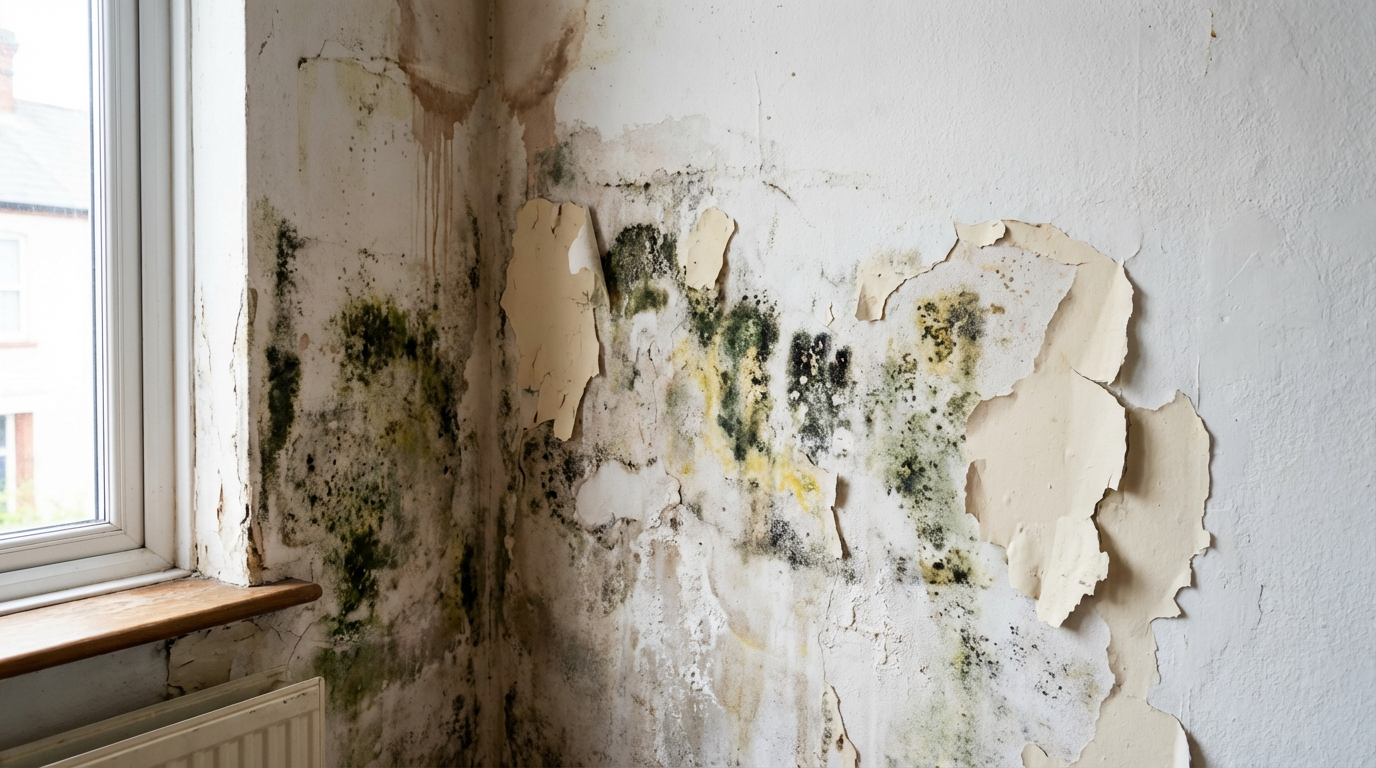
You've found a property you love in Oxford. Then you notice a crack running across the living room wall. Is it serious? Should you walk away? Should you be worried? The honest answer — and I know this isn't what people want to hear — is: it depends. But I can tell you exactly what to look for.
I'm David Harper, Senior Building Surveyor at Oxford Surveyor. I've been inspecting properties with cracks in them for over two decades. In that time, I've seen superficial cracks that frightened buyers into walking away from perfectly good properties, and I've seen hairline cracks that were symptoms of very serious structural movement. Here's how to tell the difference.
First Principle: All Old Buildings Have Cracks
This is important. If you're buying a Victorian or Edwardian property in Oxford — and a large proportion of Oxford's housing stock is exactly that — you will find cracks. They are normal. Buildings move, settle, expand and contract with temperature and moisture changes throughout their lives. A completely crack-free older building would actually be slightly unusual.
What matters is the type of crack, its width, its location, its pattern, whether it's active or historic, and whether it's associated with other signs of distress.
The BRE Classification System
The Building Research Establishment (BRE) classifies cracks into six categories based on their width and the ease of repair required. Here's a simplified version:
| Category | Width | Description | Concern Level |
|---|---|---|---|
| 0 | <0.1mm | Hairline — barely visible | Negligible |
| 1 | Up to 1mm | Very slight — fine cracks in plaster | Very slight |
| 2 | 1–5mm | Slight — easily filled | Slight |
| 3 | 5–15mm | Moderate — some repointing needed | Moderate |
| 4 | 15–25mm | Severe — structural engineer required | Severe |
| 5 | >25mm | Very severe — major work required | Very severe |
Location and Pattern: The Real Indicators
Width alone doesn't tell the full story. Where a crack is and what pattern it follows are equally important:
Horizontal Cracks
Horizontal cracks in brick or blockwork walls — especially in the outer leaf of a cavity wall — can indicate wall tie failure. Wall ties corrode, expand and push the mortar courses apart, creating parallel horizontal cracks. This is particularly common in cavity-wall properties built from the 1930s to 1970s. It's a serious finding that needs specialist investigation and likely replacement of corroded ties. If you see this pattern, get a Level 3 Building Survey.
Diagonal Cracks
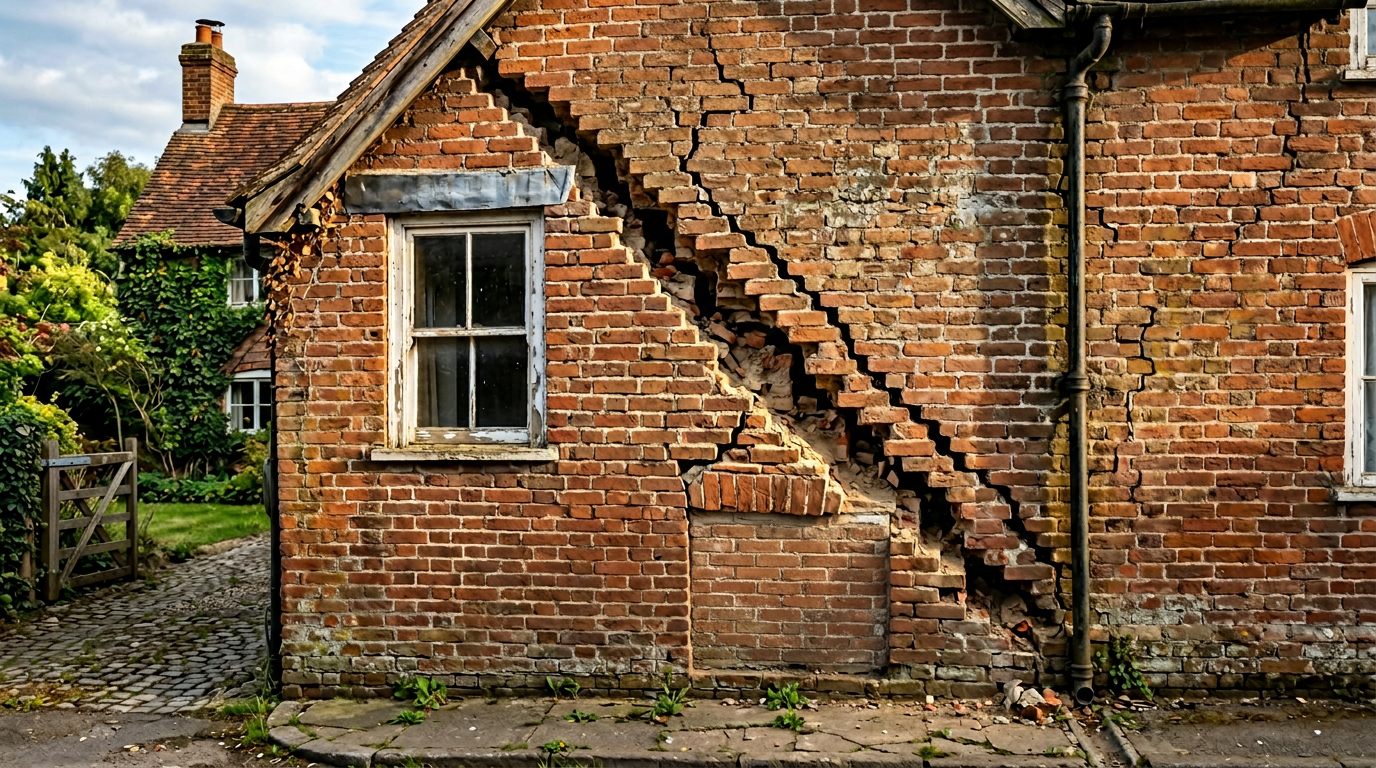
Diagonal cracks — particularly step cracks running up through mortar joints in brick or stone walls — are the classic sign of differential settlement. Something beneath the foundations is moving unevenly. Common causes in Oxfordshire include: tree roots desiccating clay subsoils (very common near mature trees in Oxford gardens), leaking drains causing ground erosion, or inadequate foundation depth. Not all diagonal cracks are serious — some are historic and have long since stabilised — but they all need a professional assessment.
Vertical Cracks
Vertical cracks often appear at the junction of different materials — where an extension meets the original building, or where different wall construction types meet. These can indicate differential thermal or moisture movement. They are usually repairable, but the underlying cause should be identified.
Active vs. Historic Cracks
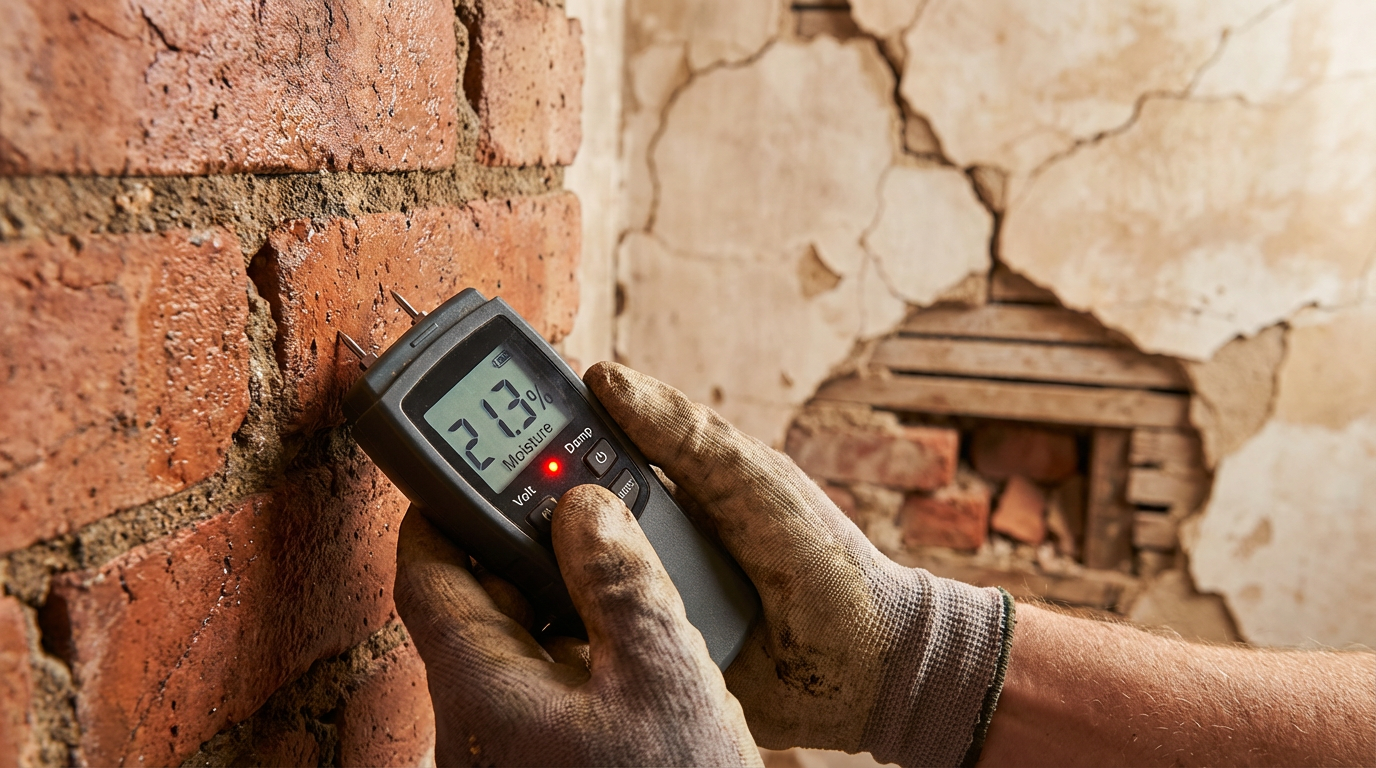
One of the most important assessments a surveyor makes is whether a crack is active (still moving) or historic (stable and no longer progressing). Tell-tale signs of active movement include:
- Fresh debris or dust in the crack
- No decorative material bridging the crack (i.e., it's appeared since the last redecoration)
- Associated distortion in window or door frames
- Seasonal variation in crack width
Historic cracks that have been stable for many years and have been filled and redecorated are generally much less concerning than active movement of any width.
When Should You Get a Specialist Structural Engineer?
Your building survey will tell you if we think a structural engineer's opinion is needed. As a rough guide, Category 3, 4 or 5 cracks — or any crack that appears to be active and is associated with distortion or displacement — should be assessed by a structural engineer before you proceed with your purchase.
We have good relationships with trusted structural engineering firms in Oxfordshire and can recommend someone appropriate if needed.
Real Oxford Case Study
We recently surveyed an Edwardian semi in North Oxford for a buyer who was concerned about a diagonal crack on the rear elevation. The crack was Category 2–3 width and had been filled and painted over multiple times. On inspection, we found the cause was a large, mature lime tree in the rear garden approximately 4 metres from the rear wall, desiccating the Oxford clay subsoil. We recommended a structural engineer's assessment and arboricultural advice. The engineer confirmed movement had occurred historically but appeared stable. The tree was professionally managed and the buyer purchased with confidence. The survey undoubtedly saved them a very expensive surprise.
Get a Professional Assessment Before You Decide
The key message is this: don't let cracks scare you away from a property before you've had a professional assessment — but don't ignore them either. The cost of an independent structural inspection or specialist crack investigation is a fraction of the cost of buying a property with a serious undiagnosed problem — or of walking away from a perfectly sound home.
Worried About Cracks in Your Oxford Property?
Our independent surveyors will assess the cracks and give you an honest, professional opinion.
Get a Free Quote