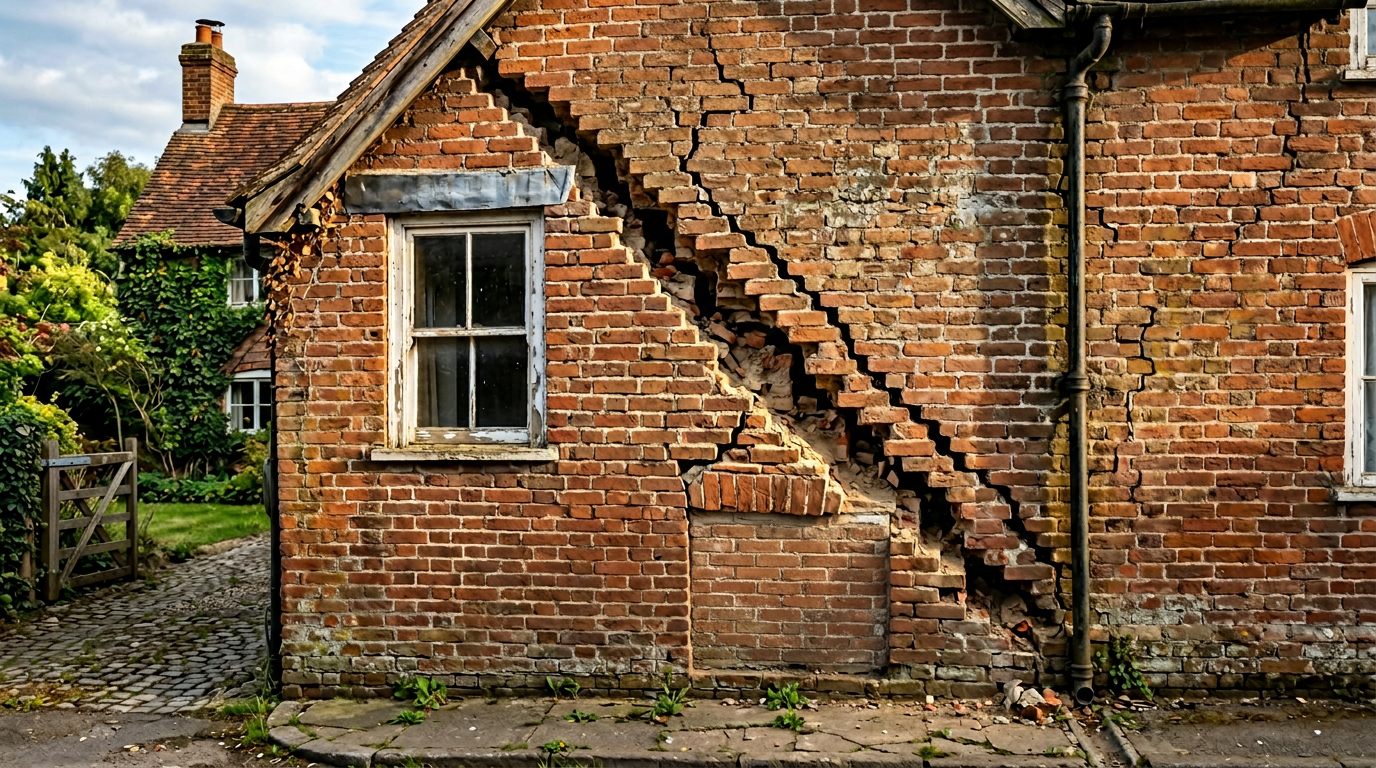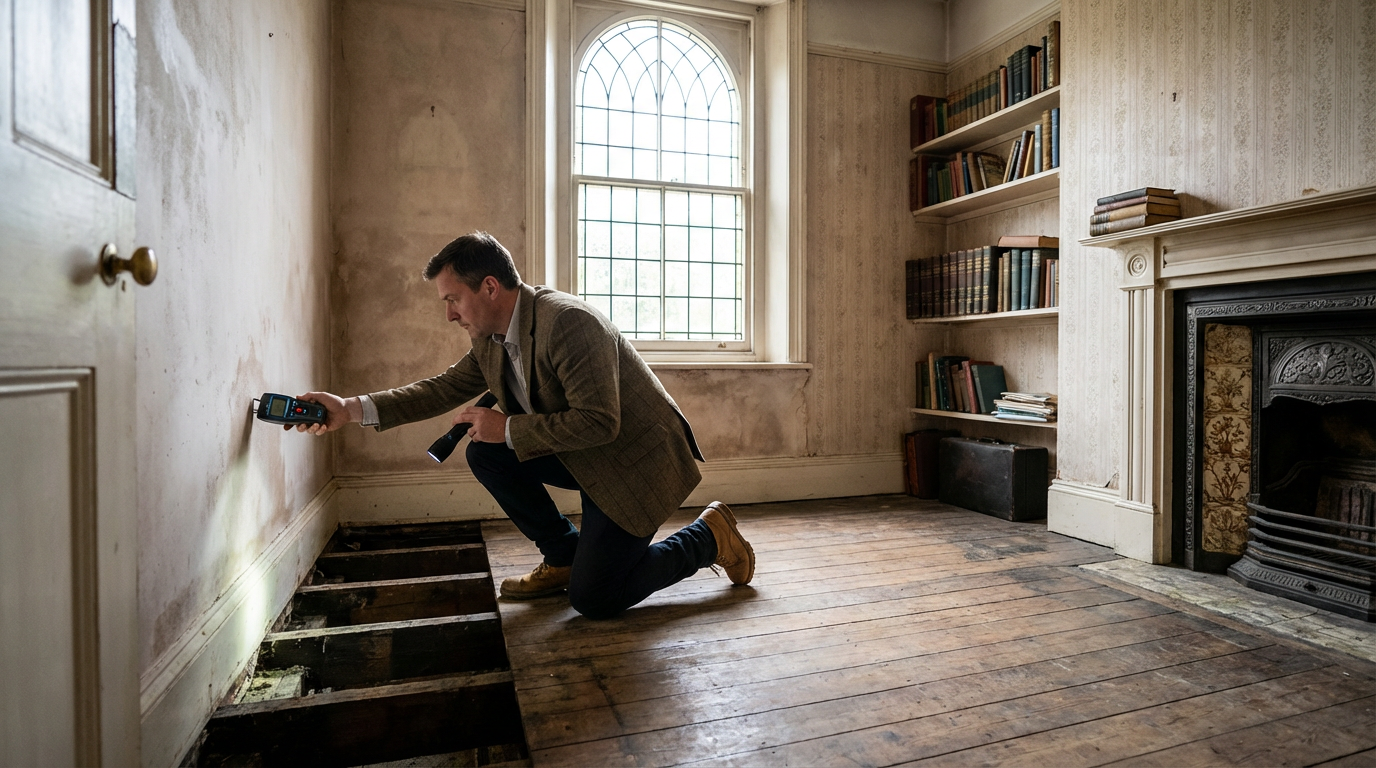
Damp is the most over-diagnosed, over-treated and most expensive property issue in Oxford. In almost twenty years of surveying residential properties across Oxfordshire, I've lost count of how many buyers have been told by damp-proofing companies that their home needs a full remedial programme — only for our independent survey to show the real problem was a blocked gutter or inadequate ventilation.
I'm David Harper, Senior Building Surveyor at Oxford Surveyor. In this guide, I want to explain the three main types of damp, how to identify them, and — critically — why accurate diagnosis is far more important than expensive treatments.
Why Damp Diagnosis in Oxford Matters So Much
Oxford has a very high proportion of older residential property. Victorian and Edwardian terraces make up large parts of Cowley, Headington, Jericho and East Oxford. These buildings were constructed using solid masonry walls and lime mortar — materials that behave very differently from modern cavity-wall construction.
These older buildings are designed to breathe. They absorb moisture and release it. Problems arise when well-meaning owners or landlords apply modern impermeable materials — cement render, modern silicone masonry paint, gypsum plaster — that trap moisture inside the wall and prevent it from escaping. The result is the damp problem they were trying to prevent.
A Common Oxfordshire Story
We surveyed a 1903 terraced house in Cowley for buyers who had been told by a damp-proofing company that the whole ground floor needed chemical injection and re-plastering — a quote of £8,400. Our investigation found that the original Victorian air bricks had been blocked by a newly poured concrete path around the base of the building, creating the conditions for moisture to build up in the floor void. Unblocking the air bricks and replacing a small section of path: approximately £300.
Type 1: Rising Damp
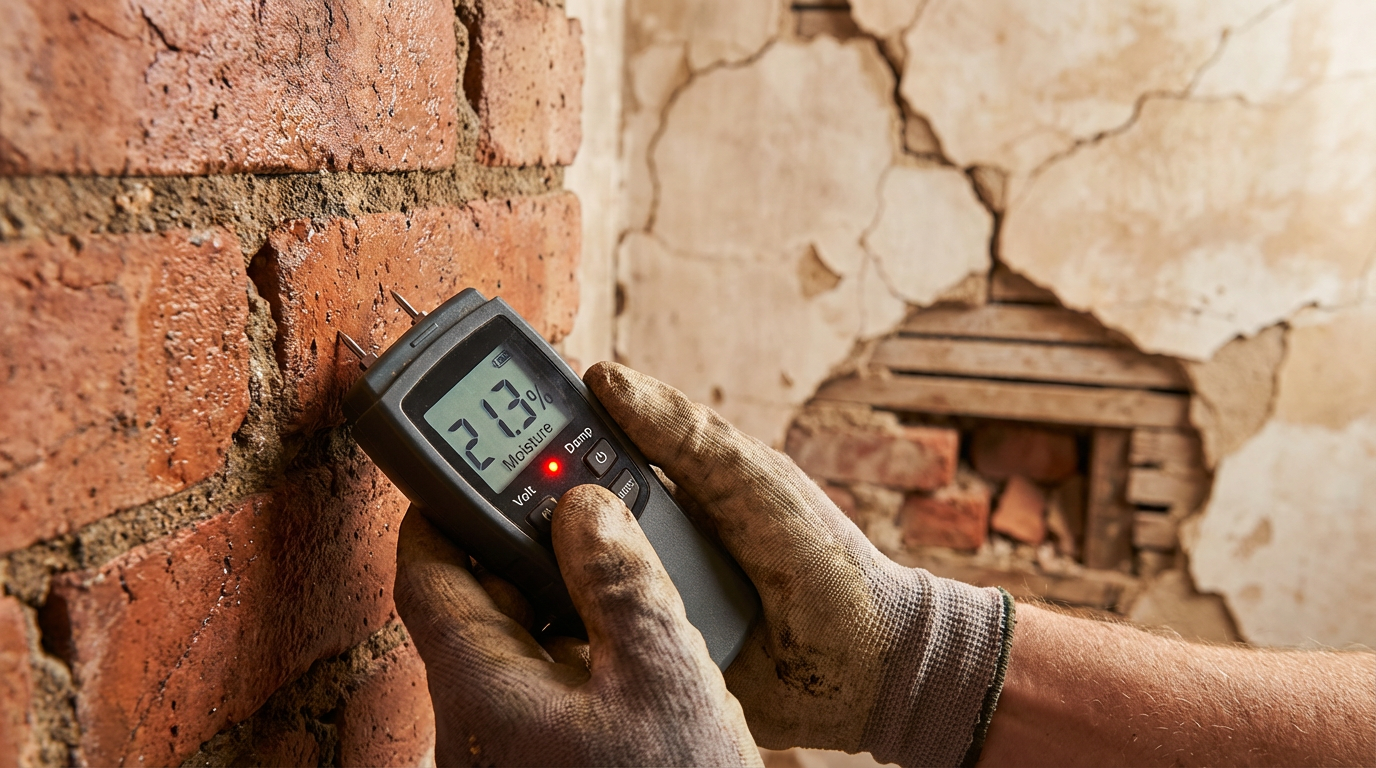
Rising damp is exactly what it sounds like — moisture rising from the ground up through the base of a wall by capillary action. It affects the lower sections of walls — typically the bottom 1 metre or so — and leaves characteristic tide marks and salt deposits (called efflorescence) on the wall surface.
True rising damp exists — but it's far less common than damp-proofing companies would have you believe. Modern buildings have a damp-proof course (DPC) — a horizontal barrier of impermeable material — built into the base of the wall. Older properties may have slate or bitumen DPCs that have cracked or failed over time.
Signs of rising damp:
- Damp concentrated in the lower metre of internal walls
- Tide marks at a fairly consistent height
- White crystalline salt deposits on wall surface
- Peeling wallpaper or bubbling paint from ground level upward
- Damp meter readings elevated low on the wall, reducing higher up
What to do: The appropriate treatment depends on the cause. A failed DPC may need chemical injection or a physical DPC inserted. However, always get an independent surveyor's diagnosis before any treatment — many cases attributed to rising damp have another cause entirely.
Type 2: Penetrating Damp
Penetrating damp occurs when water gets through the fabric of the building from the outside — through walls, roofs, windows or around pipes. In Oxford's older housing stock, it's extremely common and can affect any level of the building.
The causes are many: failed pointing in brickwork or stonework, cracked render, defective flashings around chimney stacks, broken or blocked gutters and downpipes, failed window seals, cracked coping stones on gable walls, or failed flat roofs. Each has a specific appearance and location within the property.
Signs of penetrating damp:
- Damp patches that are higher up the wall, often near windows, roof junctions or under bay roofs
- Damp that appears or worsens after heavy rain
- Localised staining rather than a consistent tide mark
- Damp directly beneath a flat roof or failed chimney flashing
- Yellow-brown staining from roof leaks tracking down ceilings
What to do: Find and fix the source. This is usually significantly cheaper than assumed. A repointed chimney stack, replaced flashing or cleared gutter can eliminate penetrating damp for a fraction of the cost of remedial work to internal plaster and decoration.
Type 3: Condensation
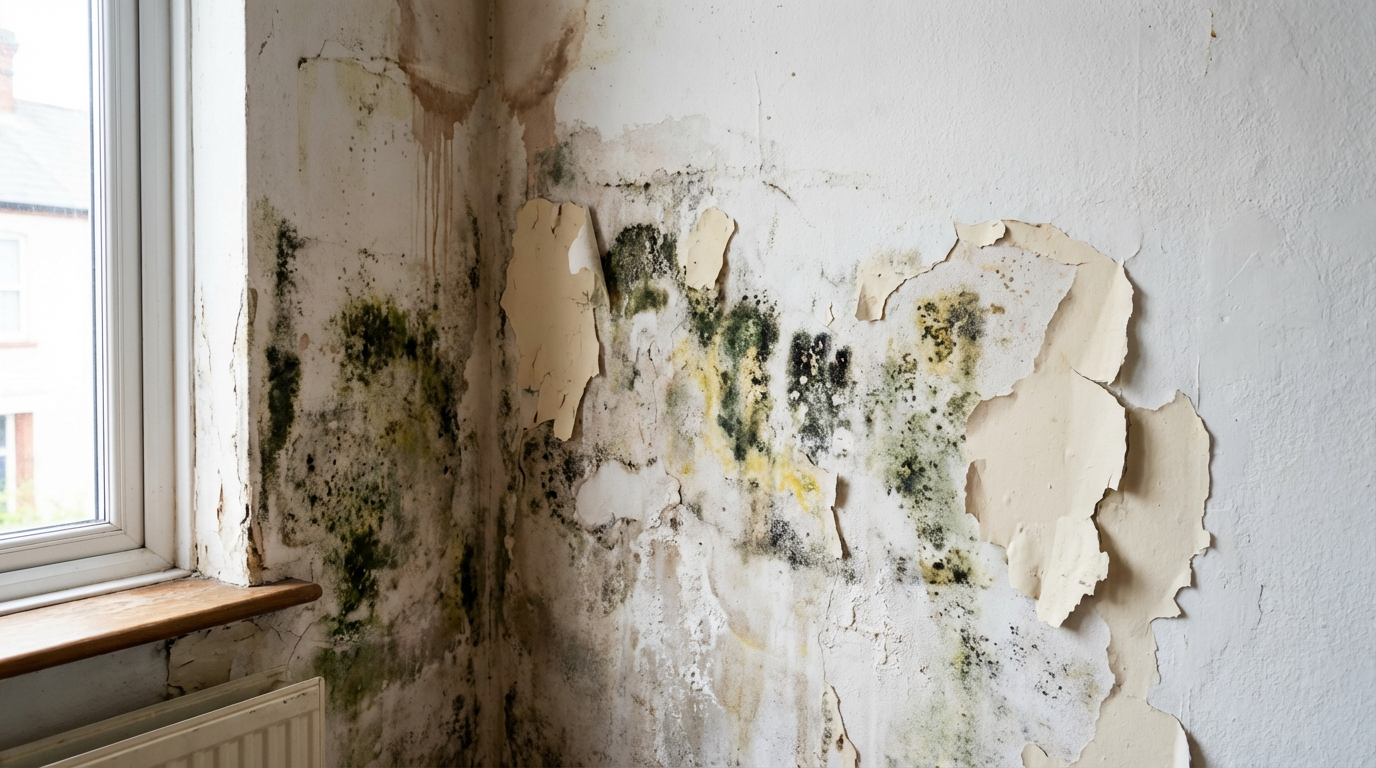
Condensation is by far the most common cause of damp-related problems in Oxford properties — particularly flats and homes with limited ventilation. It occurs when warm, moisture-laden air meets a cold surface and the moisture condenses. It most commonly appears on north-facing walls, in corners, in poorly ventilated rooms and around cold bridges.
Condensation is not a structural problem, but it can cause significant damage — black mould, damaged plaster, rotting window frames — and it has real health implications for occupants. It is also almost entirely preventable.
Signs of condensation:
- Black mould on walls, ceilings or around windows
- Mould concentrated in corners and on north-facing walls
- Water droplets on windows in cold weather
- Musty smell, particularly in bathrooms, kitchens and bedrooms
- Damp that reduces in summer or when the building is better ventilated
"Condensation is an occupancy and ventilation problem, not a structural one. The solution is usually better ventilation and heating — not chemical injection or re-plastering."
— David Harper, Senior Building Surveyor, Oxford Surveyor
Why You Need an Independent Diagnosis
Damp-proofing companies are commercial businesses. Their income comes from carrying out remedial treatments. That's not to say all damp-proofing companies are dishonest — many are excellent — but a diagnosis carried out by a company that sells treatments is inherently not independent.
An independent surveyor from Oxford Surveyor has no financial interest in any particular treatment or company. Our job is to diagnose the problem correctly and advise you on the most cost-effective solution. We regularly save clients thousands of pounds by identifying a simple fix that a treatment company has quoted a five-figure sum to remediate.
What Our Survey Will Tell You
In any of our building surveys, we will:
- Test moisture levels throughout the property using a calibrated damp meter
- Identify any areas of elevated moisture and assess their likely cause
- Distinguish between the three types of damp based on location, appearance and readings
- Flag any areas where specialist investigation is required
- Advise on appropriate and proportionate treatment where needed
If you're concerned about damp in a property you're considering buying in Oxford or Oxfordshire, get in touch. A specialist damp investigation or full Level 3 Building Survey will give you the honest, independent picture you need to make an informed decision.
Concerned About Damp in Your Oxford Property?
We offer independent damp inspections and full building surveys across Oxford and Oxfordshire. Free quote within 24 hours.
Get a Free Quote