Oxford is, quite simply, one of the most architecturally significant cities in England. With over 1,000 listed buildings within the city alone — and thousands more across Oxfordshire — it's highly likely that your property search will bring you into contact with heritage assets at some point. This guide explains what listing means in practice, the responsibilities it creates, and why your survey approach needs to be different for these special properties.
What Does 'Listed Building' Actually Mean?
A listed building is one that has been placed on the National Heritage List for England because of its special architectural or historic interest. The designation operates at three levels:
Grade I — Exceptional Interest
Only 2% of all listed buildings. These are considered the most important — think Oxford's colleges, the Radcliffe Camera and significant churches. Alterations are very tightly controlled.
Grade II* — Particularly Important
Around 6% of listed buildings. More than special interest but not quite exceptional. Still subject to very strict controls on alterations.
Grade II — Special Interest
The vast majority (92%) of listed buildings. Most Georgian, Victorian and Edwardian homes of architectural interest fall here. Still subject to Listed Building Consent requirements for many works.
What Is Listed Building Consent?
Listed Building Consent (LBC) is a form of planning permission required before making any works that would affect the character of a listed building — whether internal or external, structural or cosmetic. This is separate from, and in addition to, ordinary planning permission.
Works requiring LBC typically include (but are not limited to):
- Replacing original windows (including like-for-like replacement with uPVC)
- Removing internal walls, fireplaces or historic features
- Adding insulation to walls, roofs or floors
- Re-roofing (even with the same materials)
- Painting previously unpainted masonry
- Installing modern heating systems (particularly underfloor heating)
- Converting attic, basement or outbuilding spaces
- Significant landscaping or alterations to curtilage structures
Making changes without consent is a criminal offence — not just a planning breach. The maximum penalty is unlimited fines or up to 2 years' imprisonment. Enforcement action can also require you to undo unauthorised works at your own expense.
What Our Survey Looks for in a Listed Building
Surveying a listed building requires a different mindset to surveying a modern or conventional property. Our approach with listed buildings involves:
- Historic fabric assessment: We identify original features (fireplaces, panelling, sash windows, lime plaster, flagstone floors) and any that have been altered or lost.
- Unauthorised works identification: We look for any works that appear to have been carried out without consent — double glazing, extensions, re-pointing with cement mortar, modern insulation behind historic linings. These can carry forward liability to a new owner.
- Sympathetic repair requirements: We assess what remedial works are needed and whether they require specialist contractors (lime mortar pointing, traditional timber repair, historical glazing).
- Energy efficiency constraints: We advise on what energy improvements are feasible within the constraints of the listing and current SAP/EPC requirements.
- Insurance replacement value: Listed buildings typically cost significantly more to rebuild than their market value — the insurance sum insured must reflect specialist reinstatement costs.
Critical: Check for Unauthorised Works Before Purchase
One of the most important aspects of a listed building survey is identifying unauthorised alterations carried out by previous owners. As the new owner, you take on liability for these — meaning you could be required to undo them. Always ask the vendor for evidence of LBC for any works carried out during their ownership.
Conservation Areas: A Different Type of Control
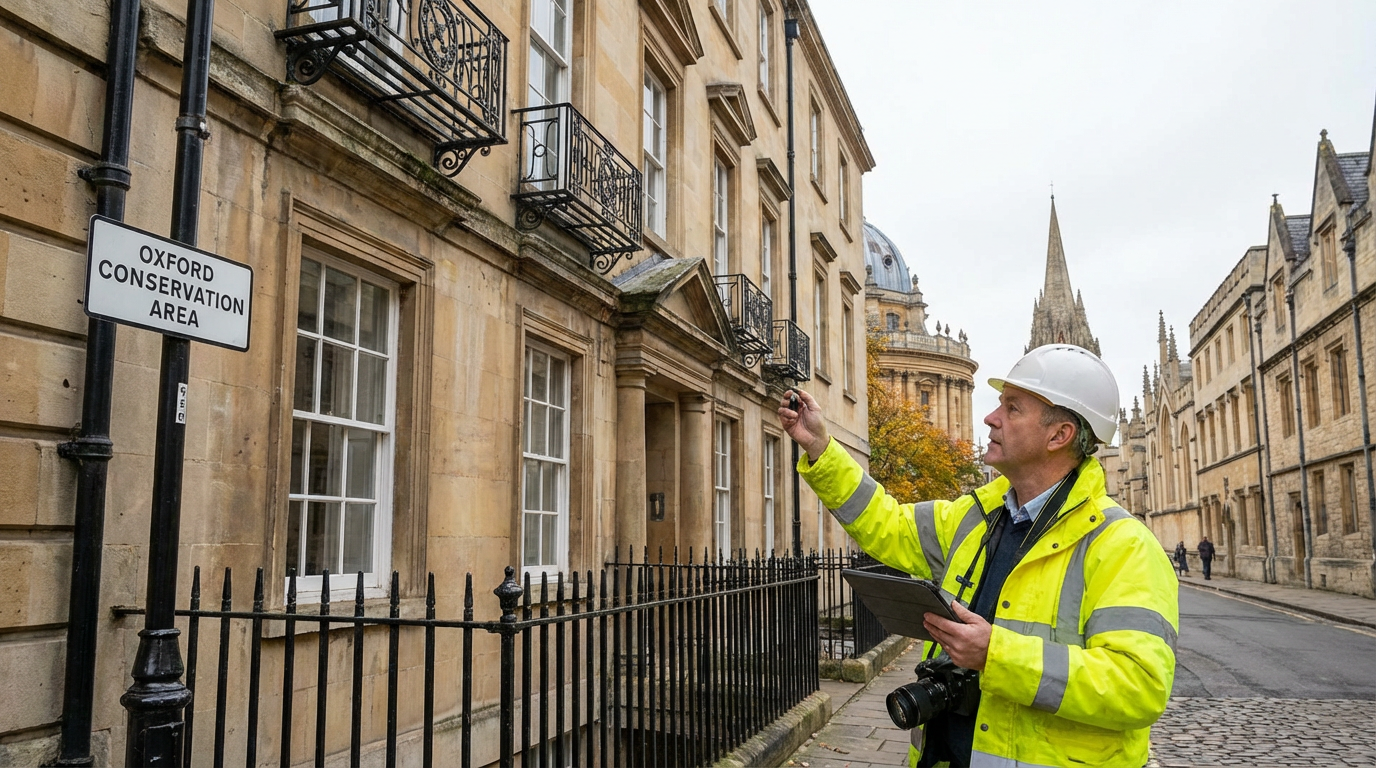
Conservation areas are designated areas of special architectural or historic interest — broader zones rather than individual buildings. Oxford city centre, North Oxford (the Victorian suburb of Norham Gardens and Park Town), Headington, Jericho and many villages across Oxfordshire are within conservation areas.
Properties in conservation areas are not automatically listed, but they do face additional planning restrictions, including:
- Permitted development rights for extensions and alterations may be reduced or removed
- Demolition of buildings or significant structures requires Conservation Area Consent
- Works to trees above a certain size require prior notification to the council
- The council must be consulted before minor development works that are normally permitted elsewhere
Budgeting Realistically for a Listed Property
Owning a listed building is rewarding — but costs are invariably higher than owning an equivalent unlisted property. When budgeting, allow for:
| Cost Category | Approximate Premium vs Standard Property |
|---|---|
| Routine maintenance and repairs | 30–50% higher (specialist materials and labour) |
| Roof work | 50–100% higher (handmade tiles, lead, lime mortar) |
| Window replacement / restoration | Draught-proofing existing windows often cheaper than replacement; secondary glazing permitted in many cases |
| Buildings insurance | Specialist policy essential — standard home insurance often inadequate |
| Planning and LBC applications | Additional professional fees; specialist heritage consultants may be needed |
Buying a Listed Building in Oxford?
Our Level 3 Building Surveys are specifically tailored for listed buildings and heritage properties. We understand what to look for, what questions to ask and how to give you the honest picture you need.
Book a Heritage Property Survey