Energy Performance Certificates have been a legal requirement for property sales and lettings in England since 2008. But they've rarely attracted so much interest as they do now — with energy bills still elevated, proposed minimum EPC standards for rented properties, and growing evidence that EPC rating affects property values across Oxfordshire. Here's everything you need to know.
What Is an EPC and How Does the Rating Work?
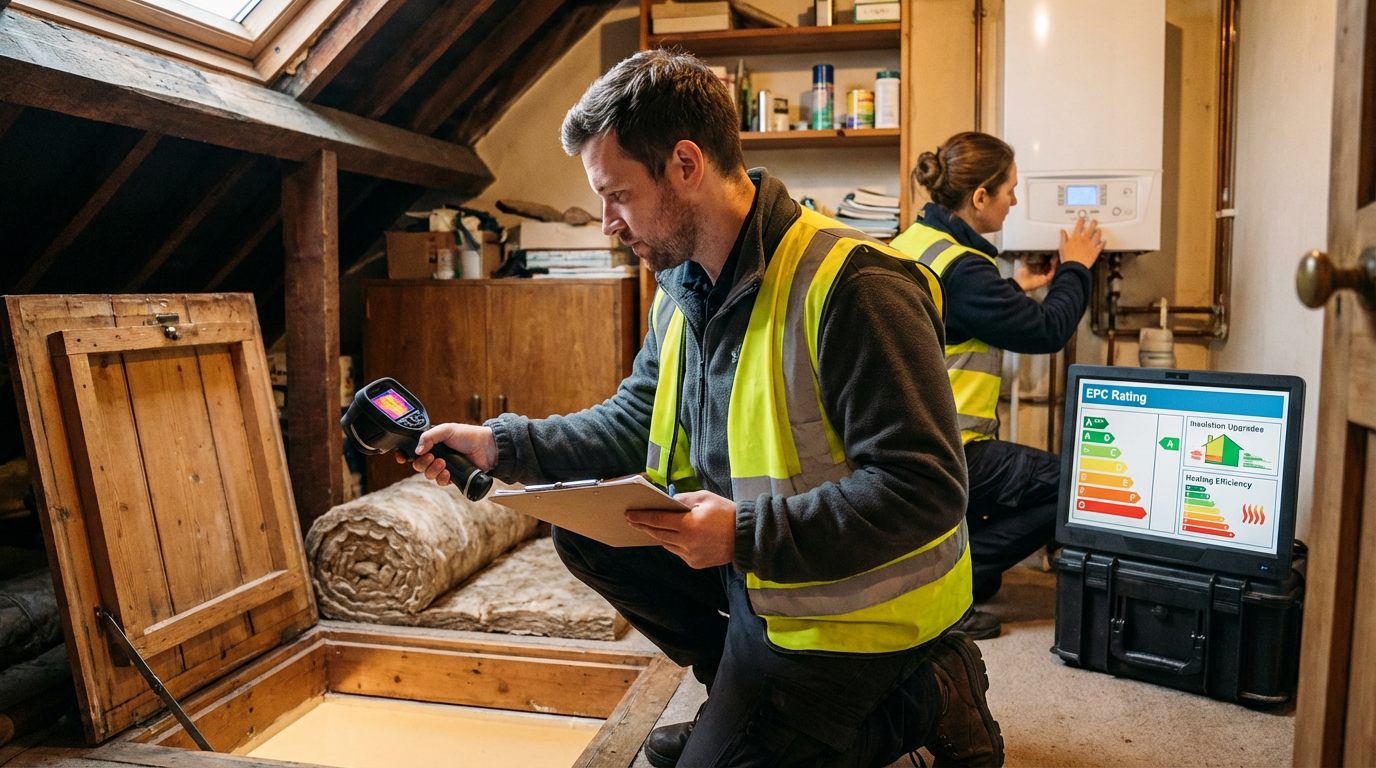
An Energy Performance Certificate gives a property an energy efficiency rating from A (most efficient) to G (least efficient). It also gives an environmental impact rating on the same scale. The certificate is produced by an accredited Domestic Energy Assessor (DEA) and remains valid for 10 years.
The rating is based on the Standard Assessment Procedure (SAP), which assesses a property's energy performance based on its construction, heating system, insulation, windows and other factors. It is a theoretical score based on the building's fabric — not on actual energy bills (which vary enormously by occupancy and lifestyle).
EPC Rating Bands — At a Glance
Current minimum legal requirement for rented homes: Band E. Proposed future minimum (tbc): Band C by 2030.
What's the Typical EPC Rating for Oxford Properties?
Oxford's housing stock is older than average. A large proportion of the city's residential properties are Victorian or Edwardian — solid-wall construction, typically with no cavity to fill. This means many Oxford homes have an EPC rating of D or E, and some older, unimproved properties may be rated F or G.
The city's conservation areas and listed buildings create particular challenges for energy upgrades, as many standard measures (cavity wall insulation, external render) are not permitted. This means buyers of Oxford's older properties need to be realistic about the EPC potential and the costs of achieving improvements within heritage constraints.
How EPC Rating Affects Property Value and Mortgages
The relationship between EPC rating and property value is becoming more pronounced. Research from Nationwide Building Society found that a property with an EPC rating of A or B achieved, on average, 1.7% more in sale price than an equivalent property rated D — with even larger premiums in some markets.
More practically, the mortgage market is increasingly influenced by EPC ratings:
- Green mortgages: Many lenders (including Barclays, NatWest and Halifax) offer preferential rates or cashback on properties with EPC ratings of A or B.
- Affordability stress testing: Some lenders now factor in expected energy costs when assessing affordability for lower-rated properties.
- Future regulation risk: The Government has signalled intentions to require minimum EPC standards for rented properties (and potentially all sales) in the coming years. Properties rated F or G may face significant compulsory investment requirements.
The Best Ways to Improve an EPC Rating in an Oxford Property
The recommendations on an EPC certificate often include all the standard measures — some of which are not relevant or feasible for older Oxford properties. Here's a practical guide to what actually works:
Loft Insulation
High Impact / Low CostIf you have a cold loft (insulation at ceiling level), upgrading to 270mm of mineral wool insulation can deliver a significant SAP improvement at relatively low cost (typically £300–£600 for a mid-terrace). Suitable for almost all Oxford properties.
Efficient Boiler Replacement
High Impact / Medium CostReplacing an old G-rated boiler with a modern A-rated condensing combi typically raises EPC scores significantly and reduces fuel bills by 25–40%. Cost: £2,000–£4,000. Not always feasible in listed buildings without planning consultation.
Secondary or Double Glazing
Medium Impact / Medium CostDouble glazing where permitted, or secondary glazing as an alternative for listed buildings and conservation areas. Secondary glazing is often more cost-effective per SAP point than double glazing and preserves original sash windows.
Solar Panels (PV)
High Impact / High CostSolar PV installations have a dramatic effect on EPC ratings (often raising D to B or better). In conservation areas, panels must be on non-street-facing elevations. Cost: £7,000–£14,000 for a 3–4kW system; payback typically 8–12 years.
Internal Wall Insulation
High Impact / Very Disruptive / Heritage ConstraintsFor solid-wall properties (most Oxford Victorians), internal insulation can dramatically improve EPC scores. However, it requires full redecoration, reduces room sizes and requires careful installation to avoid creating damp problems. Listed building consent required in many cases.
EPC and Your Building Survey
Our building surveys include commentary on energy efficiency, noting the existing EPC status and highlighting features that affect energy performance — including poorly insulated elements, inefficient heating systems and areas where moisture may be compromising thermal performance. For buyers with energy efficiency as a priority, we can discuss realistic improvement scenarios during our post-survey consultation call.
Planning to Buy or Upgrade an Oxford Property?
Our building surveys give you a comprehensive picture of your property — including energy performance. Get in touch for a free, no-obligation quote.
Get a Free Quote